~ Created by fleet pros, for fleet pros - Your voice of the Industry ~
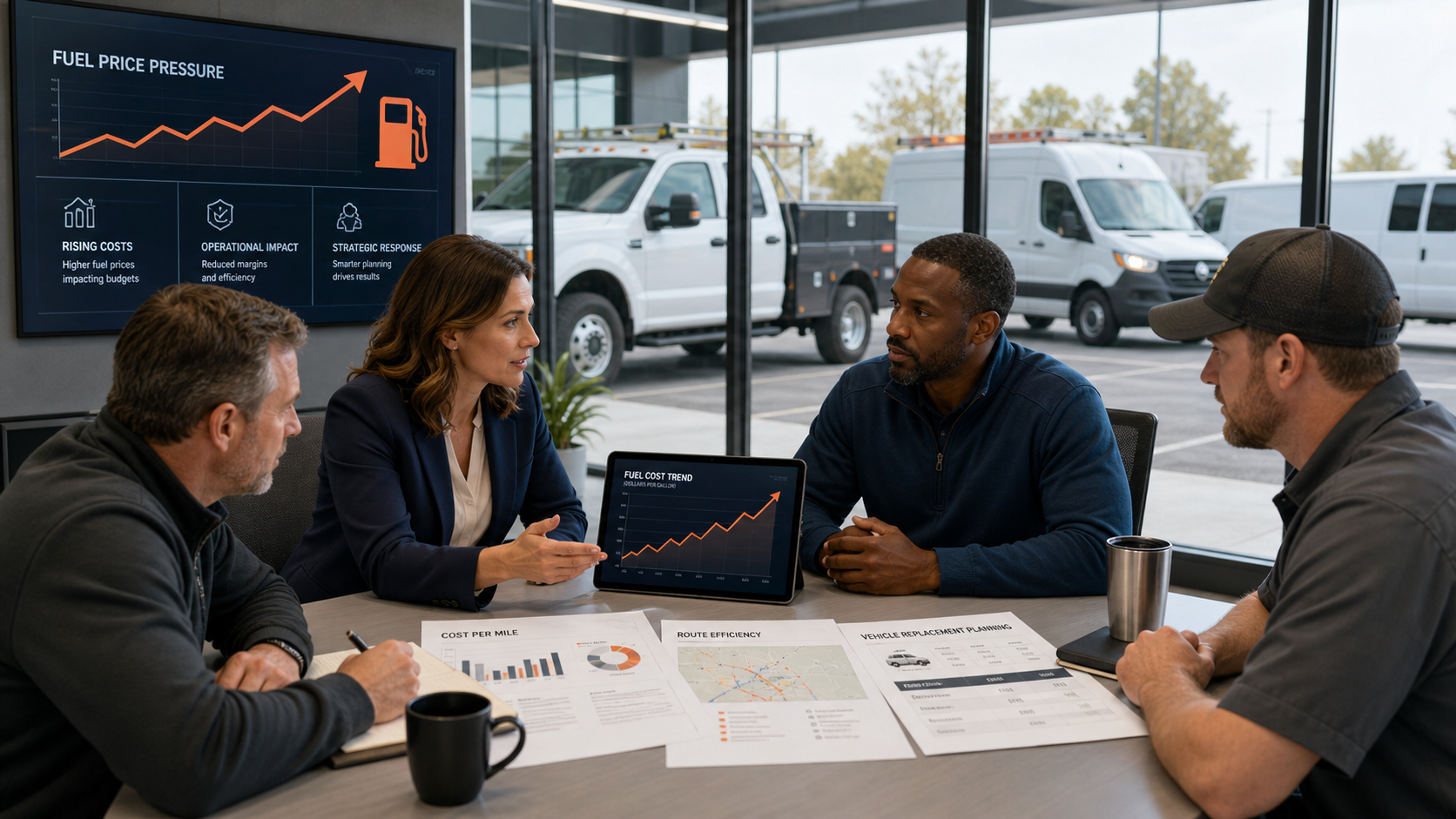

How Rising Fuel Costs Are Impacting Fleet and Commercial Businesses (And What to Do About It)
By: Casilyn Lund
Commercial Sales Strategist | Creator of the Commercial BDC Model
Fuel prices have always mattered, but right now they feel different.
The conversations happening between business owners, fleet managers, dealerships, and partners have shifted. What used to be a line item on a spreadsheet is now shaping real decisions, day to day.
Fuel prices today are sitting in a similar range to 2008, one of the most disruptive fuel-cost environments in recent history. Many of us remember the term “fuel shock.” With averages between $3.00 and $4.00 per gallon, and occasional spikes beyond that, fuel is once again driving serious business conversations.
2008 also happens to be the year I started in the automotive industry. I remember how much those fuel prices changed conversations overnight. Customers were thinking differently, buying differently, and asking better questions. What feels similar today is not just the price, but the shift in mindset that comes with it.
For many fleets, fuel already represents one of the largest operating expenses, often making up 20 to 30 percent of total costs. As prices rise, that number climbs quickly, and the impact is immediate.
For a lot of business owners, this is where it hits the hardest. Fuel is not optional. If you run a service business, a delivery operation, or any type of fleet, your vehicles have to move. Every mile driven now carries more weight than it did before, and I’m not talking about upfit or supplies.
Jobs that used to make sense financially start to feel tighter. Margins shrink without much warning. Raising prices is not always a simple solution, because customers feel the same pressure on their end.
What makes this more challenging is that many businesses were not built to constantly adjust for fuel swings. They were built to operate, serve customers, and grow based on consistency. Now, owners are being pulled into decisions about routing, vehicle usage, and replacement timing, sometimes without the data or structure to feel confident in those decisions.
It creates a sense of reacting instead of leading.
Take a contractor running a fleet of aging service vans. On the surface, everything looks fine. The vehicles are still running, and jobs are getting done. But behind the scenes, fuel efficiency has quietly declined over time. Combine that with rising fuel prices, and the cost per job starts to creep up.
Without clear visibility into those trends, it is easy to miss how much margin is being lost until it becomes a real problem.
For fleet managers, the pressure shows up in a different way. It is not just about high fuel prices; it is about unpredictable ones. Planning becomes harder. Forecasting gets less reliable. What worked six months ago may not hold up today.
Small inefficiencies that used to go unnoticed start to stand out. Idling a little too long, running older vehicles a little too far past their prime, or taking less efficient routes all start to add up quickly.
This is where the conversation begins to change in a meaningful way.
When fuel costs rise, the focus naturally shifts from what a vehicle costs to what it costs to operate. That is a very different discussion. It opens the door to thinking about lifecycle, replacement timing, and overall efficiency in a way many fleets have not fully explored before.
Without data, these decisions are guesswork.
With data, they become strategy.
From an upfitter’s perspective, this same pressure that is changing how fleets operate is also reshaping how vehicles are built.
Upfitting has always been about making a vehicle functional for the job. Shelving, racks, lifts, and storage systems are all built to help crews work efficiently in the field. But now, efficiency is being viewed through a different lens.
It is no longer just about how the vehicle works on the job site.
It is about how it performs on the road, every single day.
Weight matters more. Aerodynamics matter more. Even how the equipment is organized inside the vehicle can influence fuel consumption over time.
Is it too heavy?
Is there a more efficient way to configure it?
Are we overbuilding for what the job actually requires?
At the same time, business owners are starting to connect the dots between upfit decisions and operating costs.
What if the upfit isn’t the most expensive part of the build?
What if the fuel it burns over time is?
That realization is shifting expectations.
Upfitters are now being asked to think beyond installation. They are being pulled into conversations around total cost, vehicle lifecycle, and long-term efficiency. It is less about adding equipment and more about designing the right solution.
For those who embrace that shift, there is a real opportunity to become a partner in helping control costs, not just another step in the build process.
That same shift is happening across the dealership and fleet-management side as well.
For a long time, many dealerships have been seen primarily as suppliers. When a customer needs a vehicle, they call. When they want a price, they ask. But in an environment like this, that approach starts to feel incomplete.
Customers are looking for guidance, even if they do not always say it directly. They are trying to understand how to control costs that feel increasingly out of their hands. Fleet-management companies have traditionally stepped into that space with data and long-term planning, which is part of why they have been so effective.
But there is no reason dealerships cannot play that role as well.
In fact, this is where they can stand out.
When a dealership can sit down with a customer and talk through not just the vehicle, but how that vehicle fits into a three- or five-year plan, the relationship changes.
When they can help identify when a unit should be replaced instead of simply waiting for it to break down, the conversation becomes more strategic.
When they can connect fuel costs to vehicle choice, maintenance, and usage, they become more than a vendor.
The first step is simple: start with visibility.
Understand fuel cost per vehicle, cost per mile, and how those costs trend over time. Partnering with a qualified fuel-card provider is a strong place for a dealership to begin. From there, the right decisions around replacement, spec, and utilization become much clearer.
What is happening right now with fuel is not creating entirely new problems.
It is exposing the gaps that were already there.
Fleets that did not have clear visibility into their costs are now feeling it more. Businesses that did not have a plan for cycling vehicles are seeing the consequences. Dealerships that have not built a process around commercial and fleet are noticing how quickly customers look elsewhere for guidance.
At the same time, this moment creates an opportunity.
It pushes everyone to think differently. It encourages better questions, better conversations, and ultimately, better decisions. Fuel prices will not stay high forever, but the way businesses adapt to them right now can have a lasting impact.
For dealerships, upfitters, and partners, this is where you can step in and lead.
Here are a few simple ways to start helping your customers navigate rising fuel costs:
Start with visibility
Help customers understand their fuel cost per vehicle, per mile, and over time. Most have never seen it clearly.
Lead with total cost, not just vehicle price
Shift the conversation from upfront cost to what the vehicle will cost to operate over its lifecycle.
Guide better vehicle selection
Recommend specs, models, and configurations that improve fuel efficiency based on how the vehicle is actually used.
Ask better operational questions
Understand routing, idling, load, and daily usage. Small changes here can lead to meaningful savings.
Bring upfit into the conversation
Help customers think through weight, design, and the necessity of equipment before it is installed.
Create a simple review cadence
Fuel costs change. Their strategy should too. Even a quarterly check-in can make a difference.
The dealerships, upfitters, and partners who lean into this — who help customers make sense of what is happening and build a plan around it — are the ones who will grow.
In a market where costs are rising, the advantage will not go to the lowest price.
It will go to the partner who brings the clearest plan.
Let's connect on LinkedIn! https://linkedin.com/casilyn-lund
Casilyn's Bio:
Helping Dealerships Grow Their Fleet & Commercial Sales—One Strategy at a Time
I partner with dealerships to unlock new revenue through smarter commercial sales strategies, better appointment-setting processes, and long-term customer retention tools.
From building high-performing Commercial Business Development Centers (CBDCs) to training your team on how to present value—not just vehicles—I help your sales department close more deals with the right buyers, faster.
I also work hands-on with dealers to implement modern cycling strategies and fleet-focused software solutions that don’t just win new business... but keep it. If you're ready to grow your fleet operations with systems that actually stick, let's connect.
#TruckTalkUNewsletter #HotTopicPodcast #FleetManagement #CommercialSales #FleetStrategy #DealershipGrowth #B2BMarketing #FleetSales #AutomotiveIndustry #CommercialVehicles #FleetConsulting #SalesLeadership #FleetInsights #BusinessGrowth #FleetPartnerships #DataDrivenSales #CustomerSuccess #TrustBasedSelling #VehicleLifecycleManagement #DealershipSuccess


Connect with us!
info@trucktalku.com
P: 817-875-3695
© 2025. All rights reserved.
T






We proudly endorse our great business partners!
Click on the logos to learn more.